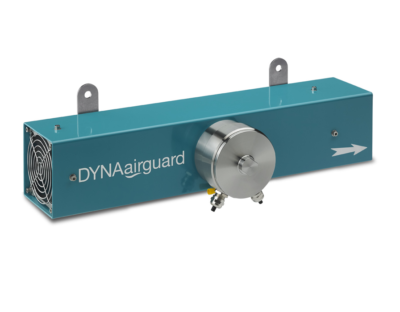

| Parameter | Specification |
| Measuring Principle | Non-contact solids velocity measurement |
| Measurement Method | Absolute transit time measurement |
| Measurement Type | Continuous online velocity measurement |
| Suitable Applications | Pneumatic conveying and free-fall processes |
| Measured Materials | Powders, dust, pellets, granules, and bulk solids |
| Analog Output | 4–20 mA |
| Communication | CAN-Bus |
| Maintenance | Maintenance-free operation |
| Calibration | No calibration required |
| System Integration | PLC, SCADA, and DYNAcon compatible |
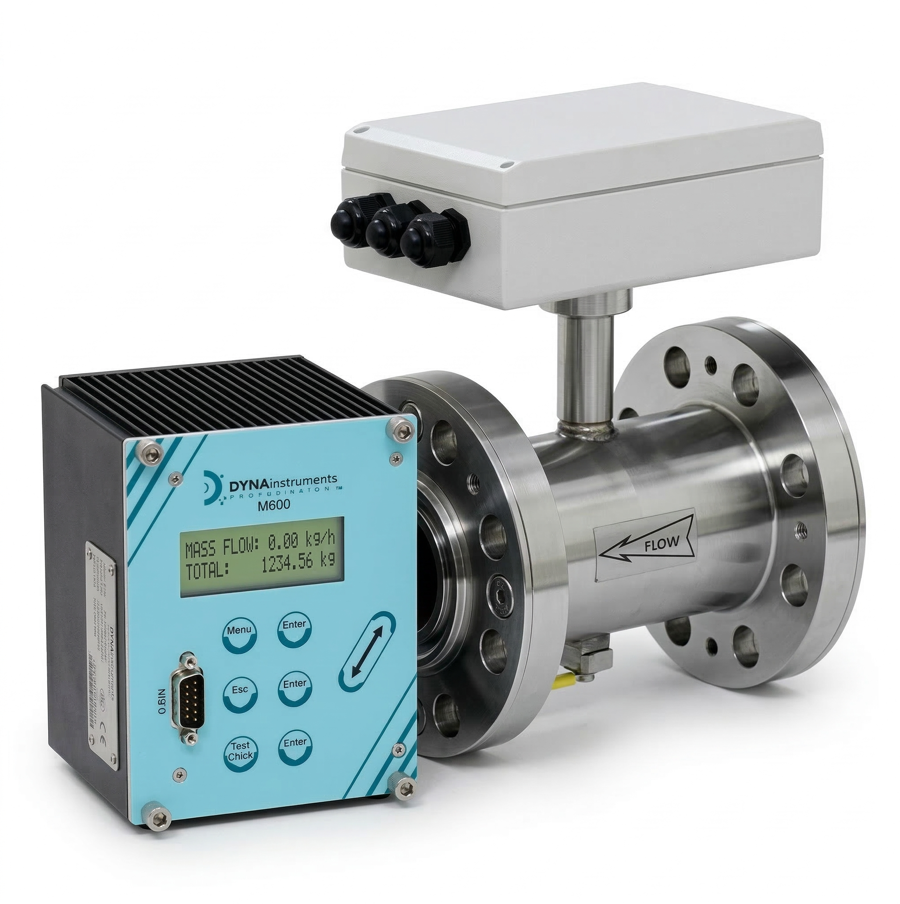
Velocity measurement DYNAvel – In pneumatic conveying systems, knowing the actual velocity of bulk solids is essential for maintaining stable process performance, optimizing air consumption, and calculating accurate mass flow. A solids velocity meter provides continuous velocity data without interrupting production, allowing operators to improve conveying efficiency while reducing equipment wear and energy consumption.
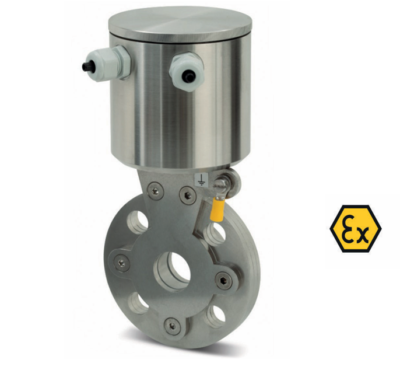
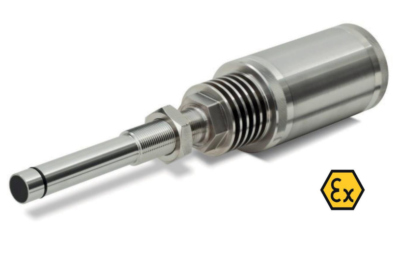
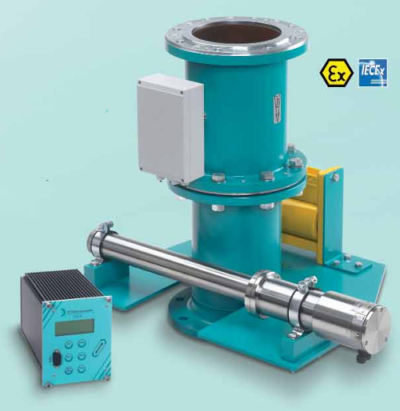
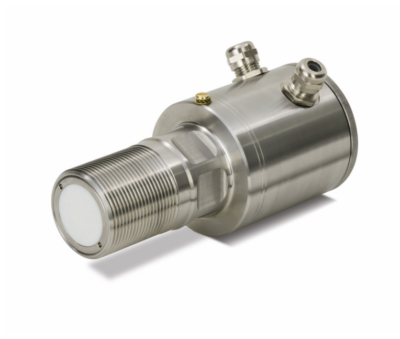
DYNAvel Velocity measurement is a non-contact solids velocity meter designed for continuous measurement of powders, dust, pellets, granules, and other bulk materials in pneumatic conveying and free-fall applications. Using an absolute transit time measurement principle, it delivers reliable velocity data without contacting the product, eliminating calibration requirements and minimizing maintenance throughout its service life.
What Is a Solids Velocity Meter or Velocity measurement?
A solids velocity meter is an industrial instrument that continuously measures the conveying velocity of bulk materials moving through pneumatic pipelines or free-fall systems. Unlike conventional sensors that estimate flow conditions indirectly, a solids velocity meter measures the actual particle velocity, providing accurate process data for monitoring and control.
In many bulk material handling systems, conveying velocity directly affects product quality, energy consumption, pipeline wear, and production stability. Measuring velocity enables operators to optimize conveying conditions while providing one of the key variables required for continuous mass flow measurement when combined with a solids concentration sensor.
Learn more: MUTEC PRODUCTS distributed by Ecozen
Why is solids velocity measurement important?
Accurate bulk solids velocity measurement helps engineers better understand how materials move through a conveying system and provides real-time information for process optimization. Continuous velocity monitoring allows plants to respond quickly to changing operating conditions instead of relying on periodic inspections or estimated values.
Key advantages include:
- Improve pneumatic conveying efficiency.
- Optimize conveying air volume.
- Reduce blower energy consumption.
- Minimize pipeline abrasion and equipment wear.
- Prevent material accumulation and pipeline blockage.
- Maintain stable conveying conditions for sensitive products.
- Provide reliable velocity data for continuous mass flow measurement.
- Support PLC and SCADA-based process automation.
Unlike contact-based technologies, DYNAvel performs non-contact solids velocity measurement, ensuring the sensor does not interfere with the product being transported. This approach is especially valuable when handling fragile or abrasive bulk materials where product integrity and equipment reliability are equally important.
Because the system continuously measures the actual conveying velocity rather than estimating it, operators gain greater confidence when adjusting blower settings, optimizing transport speed, or troubleshooting conveying performance.
Why Choose DYNAvel for Solids Velocity Measurement?
Selecting the right solids velocity meter is not only about measurement accuracy. Long-term reliability, maintenance requirements, system integration, and operational efficiency all have a direct impact on production costs. DYNAvel combines these advantages in a single non-contact measurement solution designed specifically for industrial bulk solids handling.
Key Features & Benefits
DYNAvel is engineered to provide reliable velocity measurement under demanding industrial conditions while minimizing operator intervention throughout the system’s lifetime.
Non-contact measurement
The sensor measures solids velocity without touching the conveyed material. This eliminates mechanical wear, prevents product contamination, and avoids influencing the flow characteristics of powders, granules, or other bulk solids.
No calibration required
DYNAvel uses an absolute transit time measurement principle instead of relative measurement methods. As a result, the system does not require periodic recalibration, helping reduce maintenance costs and production downtime.
Maintenance-free operation
With no moving mechanical components exposed to the product stream, the measurement system operates with minimal routine maintenance, making it suitable for continuous industrial operation.
Automatic adaptation to changing materials
Bulk solids often vary in density, particle size, and conveying conditions. DYNAvel automatically adapts to these changes, maintaining stable measurement performance across a wide density dynamic range without manual adjustment.
Reliable performance across different conveying speeds
Whether materials are transported at relatively low or high conveying velocities, the system continuously delivers accurate velocity measurements, providing dependable data for process monitoring and optimization.
Improves conveying efficiency while reducing operating costs
By providing real-time conveying velocity information, DYNAvel helps operators:
- Optimize conveying air flow.
- Lower blower energy consumption.
- Reduce unnecessary compressed air usage.
- Improve overall pneumatic conveying efficiency.
These improvements can contribute to lower operating costs while maintaining consistent production performance.
Protects equipment and product quality
Maintaining the correct conveying velocity helps reduce common problems found in pneumatic conveying systems, including:
- Particle degradation and product breakage.
- Pipeline abrasion caused by excessive transport speed.
- Material accumulation that can lead to pipeline blockage.
- Unstable conveying conditions that affect downstream processes.
This makes DYNAvel particularly suitable for applications involving sensitive powders, plastic pellets, battery materials, food ingredients, chemicals, and other bulk materials where both product quality and equipment life are critical.
Easy integration into industrial automation systems
DYNAvel supports modern industrial communication requirements through:
- CAN-Bus communication.
- 4–20 mA analog output.
- Integration with DYNAcon communication units.
- PLC and SCADA connectivity for continuous process monitoring.
- Expansion to multiple measuring points with simplified system architecture.
Rather than serving as a standalone instrument, DYNAvel becomes part of a complete process monitoring solution that supports automation, continuous optimization, and data-driven decision-making across bulk material handling operations.
Applications & Industries
DYNAvel is designed for continuous solids velocity measurement across a wide range of pneumatic conveying and free-fall applications. Its non-contact measuring principle allows it to operate reliably with different bulk materials while supporting process optimization, energy savings, and stable production.
Typical Applications
DYNAvel measures the conveying velocity of many types of bulk solids without contacting the material. The sensor continuously provides real-time velocity data, enabling operators to optimize transport conditions while maintaining consistent product quality.
Typical applications include:
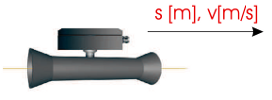
- Pneumatic conveying systems
- Free-fall processes
- Powder conveying
- Dust transport
- Pellet conveying
- Granule handling
- Plastic resin conveying
- Cement and fly ash transport
- Chemical powder handling
- Food ingredient conveying
- Battery material processing
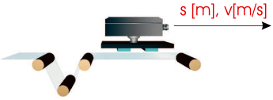
- Fiber, thread, film, and foil production
- Continuous length measurement for moving threads and foils
For pneumatic conveying systems, velocity is one of the most important process variables. Operating below the recommended conveying velocity may increase the risk of material settling and pipeline blockage, while excessive conveying velocity can accelerate pipeline wear, increase energy consumption, and damage fragile products. Continuous velocity monitoring allows operators to maintain the optimal conveying window for each material.
Because DYNAvel performs inline solids velocity measurement without disturbing the product flow, it is well suited for both new installations and retrofit projects where production continuity is critical.
Industries
Many industries rely on accurate bulk solids velocity measurement to improve process control, reduce operating costs, and maintain consistent product quality. DYNAvel supports applications ranging from light powders to dense bulk materials across continuous production environments.
Typical industries include:
- Cement
- Mining and minerals
- Chemicals
- Plastics
- Food processing
- Battery materials
- Building materials
- Recycling
- Paper
- Textile
- Power generation
- Bulk material handling
In cement and mining applications, continuous velocity monitoring helps reduce pipeline abrasion while improving conveying efficiency. In plastics and food production, maintaining the correct conveying speed minimizes product degradation and supports consistent material transfer. Battery material manufacturers benefit from stable conveying conditions that help protect sensitive powders throughout the production process.
The combination of maintenance-free operation and automatic adaptation to varying material properties also makes DYNAvel suitable for facilities processing multiple products with different bulk densities.
How DYNAvel Works
DYNAvel measures solids velocity using a non-contact absolute transit time measurement principle, providing continuous real-time data without requiring calibration or direct contact with the material.
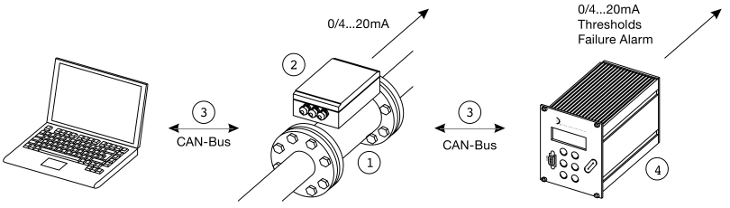
Unlike mechanical or contact-based sensors, DYNAvel does not rely on moving parts or physical interaction with the conveyed product. Instead, the system analyzes the movement of bulk solids as they pass through the measuring section, enabling reliable velocity measurement across changing operating conditions.
The measurement process can be summarized in four steps:
- The sensor continuously detects the movement of bulk solids inside the conveying line.
- The system calculates the particle velocity using an absolute transit time measurement method.
- Automatic signal adaptation compensates for changes in material density and conveying conditions.
- The measured velocity is transmitted in real time to the plant control system for monitoring and process optimization.
This measurement principle offers several practical advantages over conventional technologies:
- No contact with the product stream.
- No mechanical wear.
- No routine calibration.
- Stable long-term measurement accuracy.
- Continuous online monitoring.
- Reliable performance across a wide density dynamic range.
The real-time velocity data can also be combined with a solids concentration measurement system to calculate continuous mass flow. This provides operators with a more complete understanding of the conveying process and supports tighter production control.
For system integration, DYNAvel communicates through CAN-Bus and 4–20 mA analog output, allowing straightforward connection to existing PLC and SCADA systems. Multiple measuring points can be integrated into the same monitoring architecture, making the solution suitable for both individual conveying lines and larger plant-wide installations.
By continuously measuring actual conveying velocity instead of estimated airflow, DYNAvel gives engineers actionable process data that can be used to optimize blower settings, reduce energy consumption, improve conveying efficiency, and maintain stable operating conditions throughout the production process.
Technical Specifications
DYNAvel is designed to deliver reliable, continuous solids velocity measurement with minimal maintenance and seamless integration into industrial automation systems. The specifications below summarize the key information engineers and purchasing teams typically evaluate before selecting a solids velocity meter.
| Parameter | Specification |
| Measuring Principle | Non-contact solids velocity measurement |
| Measurement Method | Absolute transit time measurement |
| Measurement Type | Continuous online velocity measurement |
| Suitable Applications | Pneumatic conveying and free-fall processes |
| Measured Materials | Powders, dust, pellets, granules, and bulk solids |
| Analog Output | 4–20 mA |
| Communication | CAN-Bus |
| Maintenance | Maintenance-free operation |
| Calibration | No calibration required |
| System Integration | PLC, SCADA, and DYNAcon compatible |
Key purchasing considerations
When evaluating a solids velocity measurement system, engineers often focus on measurement performance, while purchasing teams also consider operating costs and long-term reliability. DYNAvel addresses both requirements by offering:
- Continuous inline measurement without interrupting production.
- Calibration-free operation that reduces maintenance costs.
- Non-contact technology with no moving parts exposed to the material.
- Easy integration into existing automation systems.
- Expandable architecture for multiple measuring locations.
- Reliable operation across a wide range of bulk material densities.
These characteristics help lower the total cost of ownership while supporting stable production over the long term.
Frequently Asked Questions
The following questions address the most common topics engineers and purchasing teams ask when evaluating a solids velocity meter for pneumatic conveying systems.
What is a solids velocity meter?
A solids velocity meter continuously measures the actual velocity of bulk materials moving through pneumatic conveying lines or free-fall processes. The measured velocity is used for process monitoring, conveying optimization, and, when combined with concentration measurement, continuous mass flow calculation.
How does DYNAvel measure solids velocity?
DYNAvel uses a non-contact absolute transit time measurement principle to calculate the velocity of moving bulk solids. Because the sensor does not contact the material, measurement remains stable without causing product contamination or mechanical wear.
Does DYNAvel require periodic calibration?
No. The measurement principle is based on absolute transit time measurement, eliminating the need for routine recalibration under normal operating conditions. This reduces maintenance requirements and minimizes production downtime.
Can DYNAvel measure powders, dust, and granules?
Yes. DYNAvel is suitable for a wide range of bulk materials, including powders, dust, pellets, granules, plastic resins, fly ash, and many other dry bulk solids commonly transported in pneumatic conveying systems.
Is DYNAvel suitable for pneumatic conveying systems?
Yes. The system is specifically developed for pneumatic conveying applications and free-fall processes where continuous velocity monitoring is essential for improving conveying efficiency, reducing energy consumption, and maintaining stable process conditions.
Can DYNAvel be integrated with PLC or SCADA systems?
Yes. DYNAvel supports CAN-Bus communication and 4–20 mA analog output, allowing straightforward integration with PLCs, SCADA platforms, and other industrial automation systems for real-time process monitoring.
Can DYNAvel be used for continuous mass flow measurement?
Yes. Velocity is one of the primary variables required to calculate mass flow. When DYNAvel is combined with a compatible solids concentration measurement system, it provides the data needed for continuous online mass flow measurement.
What industries commonly use DYNAvel?
DYNAvel is widely applicable in industries that handle dry bulk materials, including cement, mining, chemicals, plastics, food processing, battery materials, recycling, building materials, paper, and textile manufacturing.
Why is non-contact measurement important?
Non-contact measurement eliminates mechanical wear and prevents the sensor from affecting the conveyed material. This improves long-term reliability while helping preserve the quality of fragile or abrasive bulk solids.
How does continuous solids velocity measurement improve plant performance?
Real-time velocity data allows operators to optimize conveying air volume, reduce blower energy consumption, minimize pipeline abrasion, prevent material blockage, and maintain consistent conveying conditions. These improvements contribute to higher process efficiency, lower operating costs, and more reliable production.
Catalogue