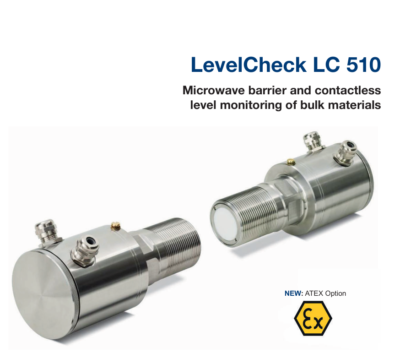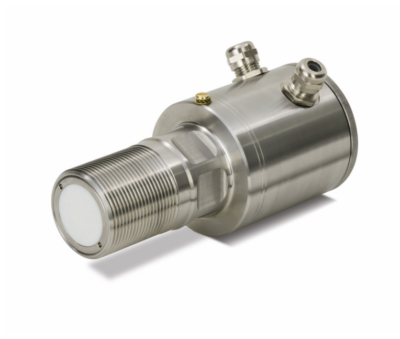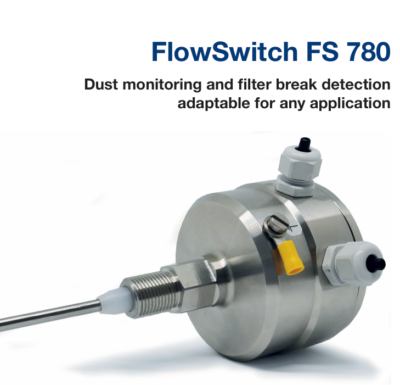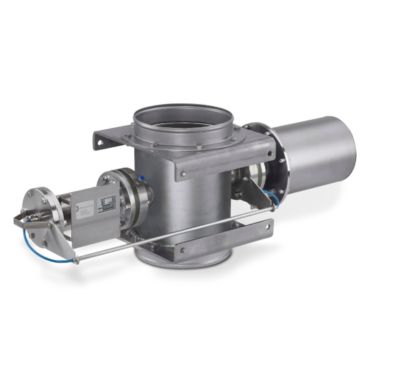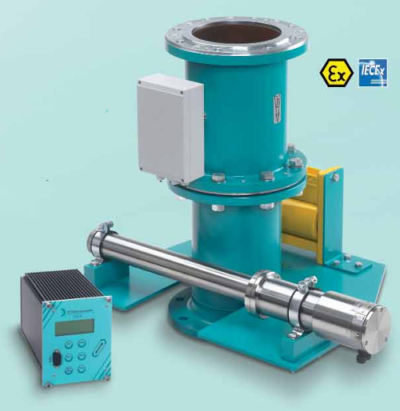
| Parameter | Specification |
|---|---|
| Supply (versions with switching output) | 24 VDC |
| Supply (versions with analogue output) | 24 VDC |
| Output (versions with relay switching output) | Max. 48 VAC/DC, 1 A; NC (normally open) / NO (normally closed) selectable |
| Output (versions with analogue output) | 4–20 mA (active), galvanically isolated, Load < 500 Ω |
| Sensitivity | From 0.1 mg/m³ |
| Damping | 0–10 s |
| Switching Point (versions with switching output) | Adjustable from 1 to 10 |
| Comparison (versions with analogue output) | 4 mA = Zero level |
| Ambient Temperature | -20 °C to +50 °C (-4 °F to 122 °F) |
| Flow Rate | Approx. 100 m³/h |
| Noise Development | 29 dB(A) |
| Material – Flow Channel | Painted steel |
| Material – Electronics Housing | Stainless Steel 1.4301 |
| Material – Sensor Rod | Stainless Steel 1.4571 |
| Sensor Rod Insulation | PA |
| Seal Material | FPM |
| Degree of Protection | IP20 (EN 60529) |
| Electromagnetic Compatibility (EMC) | According to EN 61326-1 |
| Weight | 5 kg |
Industrial facilities that handle powders, bulk solids, or dry particulate materials often face the challenge of airborne dust escaping from production equipment and conveying systems. Even low concentrations of suspended dust can affect workplace safety, product quality, equipment reliability, and environmental compliance if left undetected. Continuous ambient dust monitoring enables operators to identify abnormal dust emissions early, allowing corrective actions before they develop into larger operational or safety issues.
Explore MUTEC dust detection and monitoring solutions for applications ranging from filter-break detection to ambient air monitoring.
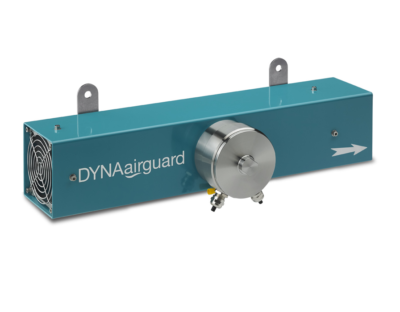
The DYNAairguard Ambient Dust Monitor is an industrial Dust Sensor for Monitoring the Ambient Air designed to continuously measure airborne dust concentration in production environments. By providing real-time monitoring and early warning of increasing dust levels, the system helps operators detect dust leaks, monitor workplace air conditions, and improve process reliability. Suitable for a wide range of industrial applications, DYNAairguard supports safer operations, preventive maintenance strategies, and continuous environmental monitoring in facilities where dust generation is an integral part of the production process.

What is DYNAairguard and Why Monitor Ambient Dust?
Ambient dust monitoring is the continuous measurement of airborne dust concentration within industrial environments to identify dust emissions, protect personnel, and maintain stable production conditions. The DYNAairguard Ambient Dust Monitor is designed specifically for continuous workplace dust monitoring, providing early detection of abnormal dust levels before they become visible or create operational risks.
Unlike stack emission monitoring, which measures emissions released to the atmosphere, ambient dust monitoring focuses on the air inside production facilities. It helps engineers understand how much dust is present around equipment, production halls, and material handling systems where employees work and where product losses or equipment failures may occur.
Industrial dust is generated during many manufacturing and bulk material handling processes. Activities such as conveying, crushing, grinding, screening, blending, transferring, and packaging powders can release fine airborne particles into surrounding work areas. Even well-designed dust collection systems may experience leakage due to worn filters, damaged seals, blocked ducts, or equipment malfunctions. Without continuous monitoring, these problems may remain unnoticed until dust accumulation becomes significant.
Implementing a continuous industrial dust monitoring system provides operators with immediate visibility into changing workplace conditions. Instead of relying solely on periodic inspections or visual observations, facilities can detect increasing dust concentrations as they occur and investigate the source before production efficiency or safety is affected.
Learn more about: MUTEC PRODUCTS
Why is ambient dust monitoring important?
Continuous workplace dust monitoring offers several operational and safety advantages across industrial facilities:
- Detect unexpected dust leaks from conveyors, transfer points, cyclones, filters, and processing equipment.
- Monitor airborne dust concentration continuously instead of relying on manual inspections.
- Improve occupational safety by reducing employee exposure to suspended dust.
- Support environmental compliance and internal workplace air quality programs.
- Identify abnormal process conditions before they lead to equipment damage or production losses.
- Enable preventive maintenance by detecting early signs of dust collection system deterioration.
- Provide continuous monitoring in areas where dust generation varies throughout production cycles.
Risks of uncontrolled airborne dust
Airborne dust is more than a housekeeping issue. In many industries, excessive dust concentrations can directly affect operational efficiency and plant safety.
Potential risks include:
- Reduced visibility inside production areas.
- Increased employee exposure to respirable dust.
- Product contamination and material loss.
- Dust accumulation on machinery and electrical equipment.
- Higher maintenance requirements caused by dust infiltration.
- Reduced efficiency of dust extraction systems.
- Increased risk of combustible dust incidents where explosive dust is present.
- Greater difficulty complying with occupational health and environmental regulations.
For facilities processing combustible materials, continuous dust monitoring also forms part of a broader dust hazard management strategy. Early detection of abnormal dust emissions allows operators to respond before hazardous dust concentrations develop, helping reduce the likelihood of secondary dust explosions when combined with appropriate engineering controls and housekeeping practices.
Where is DYNAairguard typically used?
The DYNAairguard Ambient Dust Monitor is suitable for production environments where airborne dust is generated as part of normal operation, including:
- Bulk solids handling systems.
- Pneumatic conveying lines.
- Conveyor transfer points.
- Crushers and mills.
- Cyclones and separators.
- Packaging and filling stations.
- Storage and material transfer areas.
- Industrial production halls.
By continuously monitoring workplace dust concentration, DYNAairguard provides valuable process information that supports safer operations, improved equipment reliability, and more effective environmental management. Rather than reacting only after visible dust appears, plant operators can identify developing issues early and take corrective action before they escalate into maintenance, safety, or production problems.
Key Features and Benefits of DYNAairguard
The DYNAairguard Ambient Dust Monitor combines continuous dust measurement with early warning capabilities to help industrial facilities maintain a safer and more reliable production environment. Instead of reacting after visible dust has accumulated, operators receive continuous information about changing airborne dust concentr ations, allowing maintenance teams to identify abnormal conditions and take corrective action earlier.
Continuous Ambient Dust Monitoring
Continuous monitoring is one of the most important advantages of an industrial ambient dust monitoring system. Unlike periodic manual inspections, DYNAairguard continuously measures airborne dust concentration throughout plant operation, providing real-time visibility into workplace dust conditions.
This allows operators to:
- Monitor dust concentration 24/7.
- Identify gradual increases in airborne dust.
- Observe changing process conditions during production.
- Improve overall process visibility.
- Support long-term environmental monitoring programs.
Continuous measurement also provides more reliable information than visual inspections, particularly where fine dust particles may not be immediately visible.
Immediate Dust Leak Detection
Dust leaks often develop gradually before becoming obvious. Worn seals, damaged filters, leaking conveyors, or deteriorating ductwork can release airborne particles long before operators notice visible dust.
By continuously monitoring workplace dust concentration, DYNAairguard can help identify abnormal dust emissions at an early stage, enabling maintenance personnel to investigate potential sources before larger operational problems occur.
Early detection can assist with:
- Conveyor leakage.
- Transfer point dust escape.
- Dust collector performance issues.
- Pneumatic conveying leaks.
- Process equipment failures.
- Unexpected dust emissions within production halls.
Finding these issues earlier helps reduce product loss while minimizing unnecessary production interruptions.
Real-Time Early Warning of Abnormal Dust Levels
One of the key functions of DYNAairguard is providing real-time dust monitoring with configurable alarm outputs. When airborne dust concentration exceeds predefined limits, the system can generate an alarm, allowing operators to respond immediately.
Real-time warning supports faster decision-making by:
- Alerting operators to abnormal process conditions.
- Identifying equipment malfunctions.
- Supporting emergency response procedures.
- Reducing the duration of uncontrolled dust emissions.
- Improving production stability.
Rather than waiting for complaints, visible dust, or scheduled inspections, operators receive immediate notification whenever dust levels increase unexpectedly.
Improve Workplace Safety
Airborne dust affects more than production efficiency—it also impacts workplace safety and occupational health. Maintaining lower dust concentrations helps create a cleaner working environment while reducing unnecessary employee exposure to suspended particles.
Continuous workplace dust monitoring supports safety programs by helping facilities:
- Monitor employee exposure areas.
- Detect unexpected airborne dust generation.
- Improve housekeeping effectiveness.
- Reduce dust accumulation inside production halls.
- Support occupational health initiatives.
For facilities processing combustible materials, continuous monitoring can also contribute to broader combustible dust management strategies by providing earlier awareness of abnormal dust emissions.
Reduce Maintenance Costs Through Preventive Monitoring
Many dust-related equipment failures begin with small changes that are difficult to detect visually. Increasing airborne dust concentration may indicate deteriorating filters, leaking ductwork, damaged conveyor components, or declining dust collection performance.
By identifying these changes earlier, maintenance teams can schedule repairs before they become major failures.
Preventive monitoring helps:
- Detect equipment deterioration sooner.
- Reduce unexpected downtime.
- Optimize maintenance scheduling.
- Extend equipment service life.
- Improve dust collection system performance.
- Lower maintenance costs over time.
Instead of responding only after equipment failure, facilities can move toward a more proactive maintenance strategy.
Improve Process Reliability and Environmental Compliance
Stable dust levels often indicate stable production conditions. Continuous monitoring allows operators to recognize process deviations that may otherwise remain unnoticed.
Benefits include:
- Improved production consistency.
- Better control of dust emissions.
- Reduced product loss.
- Improved housekeeping management.
- Support for environmental compliance programs.
- Documentation of workplace dust conditions.
This information can be valuable for production managers, maintenance engineers, and environmental teams seeking to improve operational performance.
Easy Installation with Low Maintenance Requirements
Industrial monitoring equipment should provide reliable operation without creating unnecessary maintenance work. DYNAairguard is designed for continuous industrial operation while minimizing routine maintenance requirements.
Typical advantages include:
- Suitable for continuous industrial monitoring.
- Simple integration into existing production facilities.
- Reliable long-term operation.
- Low routine maintenance.
- Supports retrofit projects as well as new installations.
Its practical design allows facilities to implement continuous industrial dust monitoring without major modifications to existing production processes.
Applications and Industries
The DYNAairguard Ambient Dust Monitor is suitable for a wide variety of industrial processes where airborne dust is generated during normal operation. Continuous monitoring helps operators identify dust emissions, verify process performance, and maintain cleaner working environments across different production areas.
Typical Applications
Conveyor Transfer Points
Transfer points are among the most common sources of dust emissions. As bulk materials move between conveyors, fine particles may become airborne due to impact, vibration, or material flow.
Continuous monitoring around transfer stations helps detect dust leakage early and supports timely maintenance of transfer chutes, sealing systems, and dust extraction equipment.
Pneumatic Conveying Systems
Pneumatic conveying systems transport powders and fine materials under pressure or vacuum. Leaks in pipelines, connections, or filters may release airborne dust that is difficult to identify during routine inspections.
Installing an ambient dust monitor near conveying equipment provides continuous supervision of surrounding workplace conditions.
Production Halls
Large production halls often contain multiple dust-generating processes operating simultaneously. Monitoring overall airborne dust concentration provides valuable information about workplace conditions and helps identify abnormal process behaviour.
Typical production areas include:
- Manufacturing lines.
- Mixing stations.
- Grinding processes.
- Packaging operations.
- Bulk material handling areas.
Crushers, Mills and Processing Equipment
Crushing, milling, screening, and size reduction processes naturally generate fine particulate matter. Even with dust extraction systems installed, equipment wear or changing operating conditions may increase airborne dust levels over time.
Continuous monitoring helps operators detect these changes before they become significant maintenance or safety concerns.
Packaging and Material Handling Systems
Dust may also be generated during filling, bagging, loading, unloading, and material transfer operations. Monitoring these areas helps facilities identify fugitive dust emissions that could affect product quality or workplace cleanliness.
Suitable Industries
Because airborne dust is generated in many industrial sectors, DYNAairguard can be applied across a broad range of manufacturing and bulk material handling industries.
Typical industries include:
- Cement and building materials.
- Mining and mineral processing.
- Steel and metal production.
- Chemical manufacturing.
- Food and beverage processing.
- Animal feed production.
- Plastics and polymer manufacturing.
- Biomass processing.
- Recycling facilities.
- Bulk solids and powder handling industries.
Each industry presents different dust characteristics, but the objective remains the same: continuously monitor airborne dust concentration to improve process reliability, support workplace safety, and identify abnormal dust emissions as early as possible.
Whether installed near conveying systems, production equipment, or general workplace areas, DYNAairguard provides continuous industrial dust monitoring that helps facilities operate more efficiently while maintaining cleaner and safer production environments.
How Does DYNAairguard Work?
The DYNAairguard Ambient Dust Monitor continuously measures airborne dust concentration in industrial environments, allowing operators to monitor workplace dust levels in real time. Rather than waiting for visible dust accumulation or scheduled inspections, the system detects changes in ambient dust concentration as they occur and provides immediate notification when predefined alarm thresholds are exceeded.
Continuous monitoring enables maintenance teams to identify abnormal dust emissions much earlier, helping reduce the risk of prolonged equipment faults, unnecessary product loss, or unsafe workplace conditions.
Ambient Dust Measurement Principle
DYNAairguard continuously samples the surrounding air and measures the concentration of suspended airborne dust particles. The measured value is compared against configurable alarm thresholds to determine whether workplace dust levels remain within acceptable operating conditions.
Unlike spot measurements that only provide occasional readings, continuous monitoring delivers ongoing information throughout the production cycle, allowing operators to observe both gradual and sudden changes in dust concentration.
This approach is particularly valuable because many dust-related problems develop progressively before becoming visible to operators.
Continuous Monitoring Throughout Production
Industrial processes rarely generate constant dust levels. Material flow, production rates, equipment wear, and operating conditions all influence the amount of airborne dust released into the surrounding environment.
DYNAairguard continuously monitors these changing conditions by:
- Measuring airborne dust concentration throughout plant operation.
- Tracking long-term dust trends.
- Detecting unexpected increases in dust levels.
- Monitoring workplace conditions during different production stages.
- Supporting continuous environmental monitoring programs.
Continuous measurement provides a more complete understanding of process performance than periodic manual inspections.
Intelligent Alarm Outputs
One of the key functions of the system is its ability to generate alarms whenever dust concentration exceeds predefined limits.
When abnormal dust levels are detected, the monitor can activate alarm outputs that notify operators or communicate with plant control systems. This allows maintenance personnel to investigate potential problems immediately instead of discovering them hours or days later.
Alarm functions can help identify:
- Dust collector failures.
- Conveyor leakage.
- Damaged ductwork.
- Filter deterioration.
- Process upsets.
- Unexpected dust emissions.
Early notification enables faster corrective action and helps reduce the duration of uncontrolled dust release.
Integration into Industrial Processes
The DYNAairguard Ambient Dust Monitor is designed to integrate into existing industrial facilities with minimal disruption to production.
Typical installation locations include:
- Production halls.
- Conveyor transfer points.
- Pneumatic conveying systems.
- Material handling equipment.
- Packaging areas.
- Dust collection systems.
- Bulk solids processing equipment.
Positioning the monitor close to potential dust sources allows operators to obtain meaningful information about workplace dust conditions while supporting preventive maintenance strategies.
Supporting Preventive Maintenance
Continuous dust monitoring provides more than safety information—it also serves as an indicator of equipment condition.
Increasing ambient dust concentration may suggest:
- Worn conveyor seals.
- Leaking transfer chutes.
- Damaged dust collectors.
- Blocked filters.
- Equipment deterioration.
- Process instability.
By identifying these trends early, maintenance teams can investigate developing issues before they result in costly downtime or significant production losses.
Because measurement is continuous, dust leaks can often be detected long before they become visible to operators, allowing corrective action to be taken earlier and improving both process reliability and workplace safety.
Technical Specifications
The following specifications summarize the key technical characteristics of the DYNAairguard Ambient Dust Monitor. Exact configurations may vary depending on the selected model and installation requirements.
| Specification | Details |
| Product | DYNAairguard Ambient Dust Monitor |
| Application | Continuous ambient dust monitoring in industrial environments |
| Measuring Principle | Continuous airborne dust concentration measurement |
| Measurement Type | Real-time ambient dust monitoring |
| Installation | Indoor industrial production environments |
| Monitoring Target | Airborne dust concentration |
| Alarm Function | Configurable alarm outputs |
| Outputs | Relay outputs (model dependent) |
| Power Supply | Refer to selected model specification |
| Communication | Model dependent |
| Housing | Industrial-grade enclosure |
| Protection Class | Refer to technical specification |
| Operating Temperature | According to model specification |
| Mounting | Fixed installation near monitoring area |
| Typical Applications | Production halls, conveyors, pneumatic conveying, material handling systems |
Typical Installation Locations
The monitor can be installed in locations where airborne dust is most likely to occur, including:
- Conveyor transfer stations.
- Dust collection systems.
- Production halls.
- Bulk solids handling areas.
- Packaging lines.
- Crushers and mills.
- Pneumatic conveying systems.
- Material loading and unloading stations.
Correct installation near potential dust emission sources improves monitoring accuracy and enables earlier detection of abnormal process conditions.
Frequently Asked Questions
What is an ambient dust monitor?
An ambient dust monitor is an industrial monitoring device that continuously measures airborne dust concentration within a workplace. It helps identify abnormal dust emissions, improve workplace safety, and support environmental monitoring by providing real-time information about dust levels.
What is the difference between ambient dust monitoring and stack emission monitoring?
Ambient dust monitoring measures dust present inside production facilities where employees work and industrial processes operate. Stack emission monitoring measures emissions released through exhaust stacks or chimneys to the outside environment. The two systems serve different monitoring objectives and are often used together in comprehensive environmental management programs.
Can DYNAairguard detect dust leaks?
Yes. By continuously monitoring airborne dust concentration, DYNAairguard can identify abnormal increases in dust levels that may indicate leaks from conveyors, transfer points, dust collectors, pneumatic conveying systems, or other processing equipment. Early detection allows maintenance teams to investigate and resolve issues before they become more serious.
Can ambient dust monitoring help prevent dust explosions?
Ambient dust monitoring does not prevent dust explosions on its own. However, it provides early warning of abnormal dust emissions and increasing airborne dust concentrations, allowing operators to take corrective action as part of a comprehensive combustible dust management program that includes proper housekeeping, equipment maintenance, and engineering controls.
Which industries commonly use ambient dust monitoring?
Ambient dust monitoring is widely used in industries that handle powders or bulk solids, including:
- Cement manufacturing.
- Mining and mineral processing.
- Steel production.
- Chemical processing.
- Food and feed manufacturing.
- Plastics production.
- Biomass processing.
- Recycling facilities.
- Bulk material handling operations.
Does DYNAairguard require frequent calibration?
Routine inspection and maintenance should be carried out according to the manufacturer’s recommendations. Calibration intervals depend on operating conditions, dust characteristics, and site-specific maintenance procedures to ensure reliable long-term measurement performance.
Can the monitor operate continuously?
Yes. DYNAairguard is designed for continuous industrial operation, providing real-time workplace dust monitoring throughout normal production activities. Continuous measurement enables operators to identify changing dust conditions immediately rather than relying on periodic manual inspections.
Is DYNAairguard suitable for retrofit projects?
Yes. The monitor can be integrated into both new industrial facilities and existing production plants. It is suitable for retrofit projects where continuous workplace dust monitoring is required without extensive modifications to existing production processes.
Request a Quote
Looking for a reliable ambient dust monitoring system for your facility?
Whether your application involves bulk solids handling, pneumatic conveying, cement production, mining, food processing, or other dust-generating industrial processes, the DYNAairguard Ambient Dust Monitor provides continuous workplace dust monitoring to support safer operations, improved process reliability, and early detection of abnormal dust emissions.
Contact our engineering team today to discuss your application requirements and receive a tailored solution for your industrial dust monitoring needs.
Catalogue