
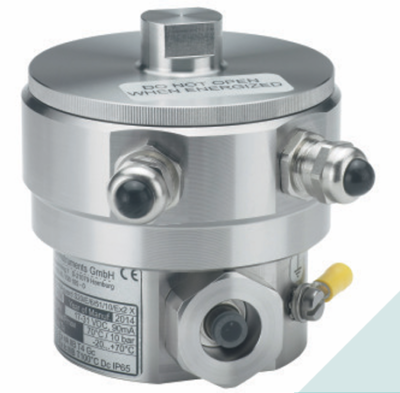
| Specification | Value |
|---|---|
| MODEL | MUTEC DYNAguard S FS 620 – Flow switch for bulk solids in flexible hoses |
| Measurement Principle | Electrostatic (Contactless) |
| Application | Flexible Hose Flow Monitoring |
| Sensitivity | 0.1 mg/m³ |
| Output | Relay, Transistor or 4–20 mA |
| Operating Pressure | Up to 10 bar (140 psi) |
| Operating Temperature | Up to +70°C (158°F) |
| Protection Rating | IP67 |
| Hazardous Area | Optional ATEX Zone 2 / 22 |
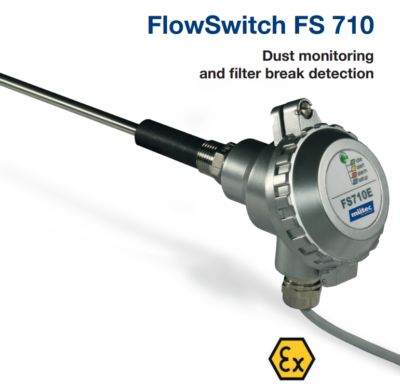
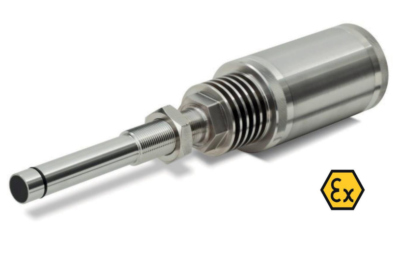
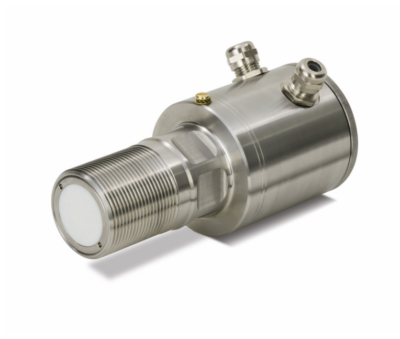
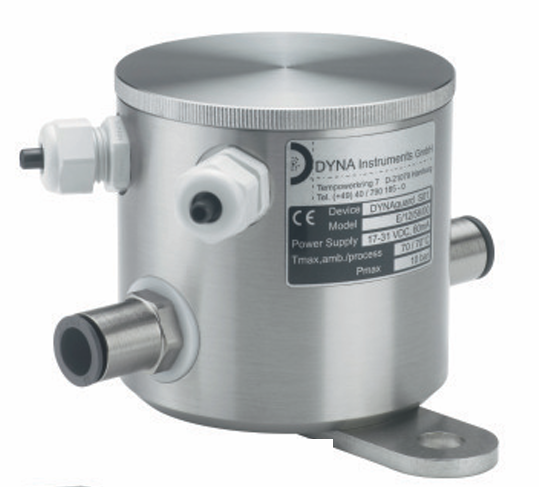
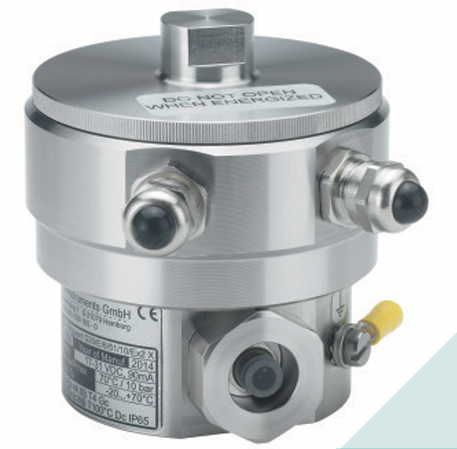
The MUTEC DYNAguard S FS 620 Solid Flow Switch for Flexible Hoses is a contactless flow monitoring solution designed to detect the movement of powders, granules, pellets, dust, blasting media, and other bulk solids conveyed through flexible hoses. Using an electrostatic measurement principle, the sensor detects only moving particles and provides either a relay output for flow alarms or a 4–20 mA analog output for flow trend monitoring. This enables early detection of process issues such as blockages, empty hoppers, and material bridging before they lead to production interruptions.
The compact sensor is easy to install on flexible hoses without obstructing material flow, making it suitable for pneumatic conveying systems across the chemical, cement, plastics, food, feed, and mineral industries. DYNAguard S is available in multiple installation configurations to accommodate both non-conductive and conductive hose applications while maintaining reliable, maintenance-friendly operation.
 |  |
What Is the DYNAguard S FS 620 Solid Flow Switch?
The DYNAguard S FS 620 is a contactless solid flow switch that monitors the movement of bulk solids inside flexible hoses and immediately detects flow interruptions, blockages, empty hoppers, or material bridging in pneumatic conveying systems.
In many bulk solids processes, maintaining a continuous material flow is just as important as measuring the exact flow rate. A temporary blockage inside a conveying hose or an empty hopper can quickly interrupt downstream equipment, reduce production efficiency, or even damage the process. The DYNAguard S FS 620 is designed specifically to monitor these conditions and generate an alarm as soon as abnormal flow behavior is detected.
Unlike conventional mechanical flow switches, the DYNAguard S operates without contacting the conveyed material. Instead, it monitors naturally occurring electrical charges generated by moving particles, allowing reliable detection without introducing pressure loss or moving mechanical components into the conveying line. Depending on the selected model, the device can provide:
- Relay output for flow/no-flow indication.
- Transistor output for digital integration.
- 4–20 mA analog output for continuous flow trend monitoring through a PLC or process control system.
The sensor is optimized for monitoring bulk solids transported through flexible hoses, including:
- Powders
- Granules
- Pellets
- Dust
- Blasting media
- Other pneumatically conveyed solid materials
Within the DYNAguard product family, the DYNAguard S is the dedicated model for flexible hose applications. It supports several installation methods depending on hose type and process requirements:
- Version T – the hose passes directly through the sensor body without being cut.
- Version E – the hose is cut and connected to integrated hose fittings.
- Version W – designed for plug-on installation and conductive hose applications.
This flexible design allows the sensor to be integrated into both new and existing pneumatic conveying systems while maintaining a compact footprint and simple installation.
Learn More: MUTEC PRODUCTS distributed by ECOZEN
How Does the DYNAguard S FS 620 Work?
The DYNAguard S FS 620 detects material flow by measuring the naturally occurring electrostatic charges carried by moving bulk solids. Because only moving particles generate a measurable signal, the sensor can distinguish actual material flow from stationary deposits inside the hose.
The operating principle is based on electrostatic flow detection, sometimes referred to as a triboelectric measurement principle. As powders, granules, pellets or dust travel through a flexible hose, the particles continuously rub against one another and against the inner hose wall. This friction causes small electrical charges to accumulate naturally on the particle surfaces. The DYNAguard S detects these moving electrical charges and converts them into a stable process signal.
The measurement process can be summarized as follows:
Bulk Solids
      ↓
Particle Movement
      ↓
Friction Against Hose Wall
      ↓
Natural Electrostatic Charges
      ↓
Sensor Detects Moving Charges
      ↓
Signal Processing
      ↓
Relay Alarm or 4–20 mA Output
Electrostatic detection instead of mechanical contact
Unlike paddle switches or mechanical probes that rely on direct contact with the product, the DYNAguard S performs a contactless measurement. The hose remains the conveying path while the sensor monitors electrical activity generated by the moving material. Since no mechanical parts are exposed to the product stream, the measurement process does not interfere with conveying performance and minimizes wear.
Why are only moving particles detected?
A key advantage of the electrostatic measurement principle is that only moving particles generate a usable signal. Material that has stopped moving or accumulated on the hose wall no longer produces changing electrical charges. As a result, the sensor responds to real material movement rather than simply detecting the presence of bulk solids.
This characteristic provides several practical benefits:
- Reliable detection of actual material flow.
- Fast identification of conveyor blockages.
- Early warning of empty hoppers or interrupted conveying.
- Reduced risk of false alarms caused by product deposits inside the hose.
Stable monitoring under changing process conditions
The DYNAguard S allows the measurement sensitivity and signal damping to be adjusted according to the application. Sensitivity can be optimized for different material characteristics, while damping filters short-term fluctuations to provide a stable switching signal. For applications requiring continuous process information instead of a simple alarm, the analog version supplies a 4–20 mA output that represents the material flow trend and can be integrated into PLC or SCADA systems for process monitoring.
It is important to note that the electrostatic principle requires detectable electrical charges from the conveyed product. According to the manufacturer, the sensor is not suitable when bulk solids form a continuous electrically conductive layer on the inner hose wall, as this can prevent reliable signal detection.
This combination of contactless measurement, moving-particle detection, adjustable sensitivity, and relay or analog outputs makes the DYNAguard S FS 620 a practical solution for continuously monitoring material flow in flexible hose pneumatic conveying systems.
Key Features and Benefits of the DYNAguard S FS 620
The DYNAguard S FS 620 combines contactless electrostatic sensing with flexible installation and configurable outputs, making it a reliable solution for monitoring bulk solids flow in pneumatic conveying systems.
Unlike conventional mechanical flow switches that rely on moving parts or direct contact with the product, the DYNAguard S continuously monitors material movement without interfering with the conveying process. This reduces wear, simplifies maintenance, and provides reliable flow monitoring across a wide range of bulk solids applications.
Contactless Flow Monitoring
The DYNAguard S uses an electrostatic measurement principle to detect moving particles through the wall of a flexible hose. Since the sensor never contacts the conveyed material, it introduces:
- No pressure loss inside the conveying line.
- No mechanical wear from abrasive materials.
- No obstruction to material flow.
- Stable long-term monitoring with minimal maintenance.
This non-contact design is particularly suitable for powders, granules, pellets, dust, and other dry bulk solids transported pneumatically.
Detects Very Low Material Flow
With a process sensitivity of 0.1 mg/m³, the sensor can detect even very small amounts of moving material. This allows operators to identify abnormal flow conditions before they develop into complete process interruptions.
Typical events that can be detected include:
- Blocked conveying hoses.
- Empty hoppers.
- Material bridging inside storage vessels.
- Interrupted pneumatic conveying.
- Unexpected loss of material flow.
Flexible Installation for Different Hose Types
The DYNAguard S supports several installation methods, allowing the sensor to be adapted to different plant layouts and hose materials.
- Version T – the hose passes directly through the sensor without cutting.
- Version E – the hose is cut and connected using integrated hose fittings.
- Version W – designed for plug-on installation, especially suitable for conductive hoses or larger hose diameters.
This flexibility makes the device suitable for both new installations and retrofit projects.
Relay or Analog Output
The product is available with multiple output configurations depending on the control philosophy of the plant.
- Relay output for simple flow/no-flow alarms.
- Transistor output for digital automation systems.
- 4–20 mA analog output for continuous flow trend monitoring and PLC integration.
The analog version is particularly useful when operators want to observe gradual changes in material flow instead of relying only on alarm thresholds.
Adjustable Sensitivity and Signal Damping
Different bulk materials generate different electrostatic signal levels. To accommodate these variations, the DYNAguard S allows users to adjust:
- Measurement sensitivity.
- Switching threshold.
- Signal damping time.
Signal damping filters short-term fluctuations caused by temporary variations in conveying conditions, helping maintain a stable switching signal while reducing nuisance alarms.
Designed for Industrial Reliability
The sensor is engineered for demanding industrial environments and includes several features that improve long-term reliability.
Key specifications include:
- Stainless steel electronics housing.
- IP67 enclosure protection.
- Operating pressure up to 10 bar.
- Ambient temperature from −20°C to +70°C.
- Optional ATEX Zone 2/22 version for hazardous areas.
These characteristics make the DYNAguard S suitable for continuous operation in industries where dust, vibration, and harsh process conditions are common.
Typical Applications Across Bulk Solids Industries
The DYNAguard S FS 620 is designed for continuous flow monitoring of dry bulk solids transported through flexible hoses, helping operators detect blockages, empty hoppers, and interrupted conveying before production is affected.
Material flow interruptions are among the most common causes of unplanned downtime in pneumatic conveying systems. Because the DYNAguard S detects actual particle movement instead of simply sensing material presence, it can provide early warning whenever conveying conditions change unexpectedly.
Materials Suitable for Monitoring
The sensor is suitable for a wide range of dry bulk solids, including:
- Powders
- Granules
- Pellets
- Dust
- Blasting media
- Other free-flowing bulk solids transported pneumatically.
Typical Process Applications
The DYNAguard S can be installed at critical points within a conveying system to monitor process continuity.
Common applications include:
- Pneumatic conveying lines.
- Flexible transfer hoses.
- Hopper discharge monitoring.
- Silo outlet monitoring.
- Additive dosing systems.
- Material transfer between processing equipment.
By monitoring these locations, operators can quickly identify abnormal flow conditions and respond before they affect downstream equipment.
Process Problems That Can Be Detected
Instead of measuring the exact mass flow rate, the DYNAguard S focuses on identifying whether material is moving as expected.
Typical process events include:
- Blockage inside conveying hoses.
- Empty hopper conditions.
- Product bridging above hopper outlets.
- Interrupted pneumatic conveying.
- Unexpected reduction in material movement.
Typical Industries
The electrostatic measurement principle is suitable for many industries handling dry bulk materials, including:
- Cement and building materials.
- Chemical processing.
- Plastics manufacturing.
- Food processing.
- Animal feed production.
- Minerals and mining.
- Dust collection and powder handling systems.
| Material | Typical Application | Process Issue Detected |
|---|---|---|
| Cement powder | Pneumatic conveying | Blockage |
| Plastic pellets | Material transfer | Flow interruption |
| Flour | Hopper discharge | Empty hopper |
| Animal feed | Pneumatic conveying | Material bridging |
| Mineral powder | Flexible hose transport | Reduced flow |
| Industrial dust | Dust conveying systems | Conveying failure |
Selecting the correct monitoring location allows the DYNAguard S to function as an early warning device, improving process reliability while reducing unplanned downtime caused by unnoticed flow interruptions.
Technical Specifications
The DYNAguard S FS 620 provides the essential specifications required by engineers and purchasing teams to evaluate compatibility with flexible hose pneumatic conveying systems.
Rather than focusing on every available configuration, the following specifications summarize the key parameters that directly affect installation, process compatibility, and system integration.
| Specification | Value |
|---|---|
| Measurement Principle | Electrostatic detection of moving particles |
| Hose Installation | Pass-through (T), Plug-in (E), Plug-on (W) |
| Output Options | Relay, Transistor or 4–20 mA Analog |
| Process Sensitivity | 0.1 mg/m³ |
| Operating Pressure | Up to 10 bar |
| Operating Temperature | Up to 70°C (standard) |
| Protection Rating | IP67 |
| Hazardous Area Version | Optional ATEX Zone 2 / 22 |
Measurement Principle
The DYNAguard S measures the electrostatic charges generated by moving particles inside a flexible hose. Because the sensor responds only to particle movement rather than material accumulation, it is well suited for detecting interrupted flow, blockages, and empty conveying conditions.
Installation Options
Three installation versions are available to accommodate different hose materials and installation requirements.
- Version T – the hose passes directly through the sensor.
- Version E – the hose is cut and connected using hose fittings.
- Version W – plug-on installation for conductive hoses or larger hose diameters.
This flexibility allows the sensor to be integrated into both new equipment and retrofit installations.
Output Configuration
Depending on the application, users can select the output that best matches their control system.
- Relay output for flow/no-flow switching.
- Transistor output for digital control systems.
- 4–20 mA analog output for continuous flow trend monitoring and PLC integration.
Industrial Protection
The DYNAguard S is designed for continuous industrial operation with:
- Stainless steel electronics housing.
- IP67 enclosure protection.
- Operating pressure up to 10 bar.
- Ambient temperature range from −20°C to +70°C.
- Optional ATEX certification for Zone 2 and Zone 22 installations.
These specifications make the sensor suitable for demanding environments where dust, vibration, and continuous production are common.
Why Choose the DYNAguard S FS 620 for Bulk Solids Flow Monitoring In Flexible hoses?
The DYNAguard S FS 620 is best suited for applications that require reliable detection of material movement inside flexible hoses without interrupting the conveying process.
Selecting a solid flow switch is not only about detecting whether material is present. In pneumatic conveying systems, the more important objective is identifying whether material is actually moving so operators can react before production is interrupted.
The DYNAguard S addresses this requirement through contactless electrostatic sensing, allowing continuous monitoring without inserting mechanical components into the product stream. This approach helps improve process visibility while minimizing maintenance requirements.
The DYNAguard S is particularly suitable when your process requires:
✓ Reliable blockage detection inside flexible conveying hoses.
✓ Early indication of empty hopper conditions before downstream equipment is affected.
✓ Detection of material bridging at silo or hopper outlets.
✓ Contactless monitoring that does not interfere with pneumatic conveying.
✓ Continuous flow trend monitoring through a 4–20 mA analog signal.
✓ Easy integration into existing conveying systems using multiple installation options.
✓ Operation in demanding industrial environments, including applications requiring an optional ATEX-certified version.
For facilities that rely on continuous pneumatic conveying, these characteristics help improve process reliability by detecting abnormal conveying conditions before they develop into extended production downtime.
If your application involves flexible hose bulk solids conveying and requires dependable flow/no-flow detection or flow trend monitoring, the DYNAguard S FS 620 provides a compact, contactless solution that can be integrated into both new installations and existing conveying systems with minimal process modification.